Table of contents
Introduction
Futuristic and exciting ideas tend to gain traction quickly. Whether they are realistic or not often matters less at first. After all, no one can really prove that an idea will work until someone actually tries it. The concept alone can be interesting enough to grab everyone's attention.
However, that initial enthusiasm often fades once people start analyzing the complexities, trade-offs, and potential downsides. In many cases, the idea ultimately turns out to be feasible, but the path to making it practical and usable may lead in directions that no one initially anticipated.
From message to binary code
In this article, I want to explore the idea of generating binaries directly from a message, without first producing human-readable source code.
In other words, the goal would be to avoid traditional steps in the build process that typically transform human-written code into a final executable binary.
The process can be visualized like this:
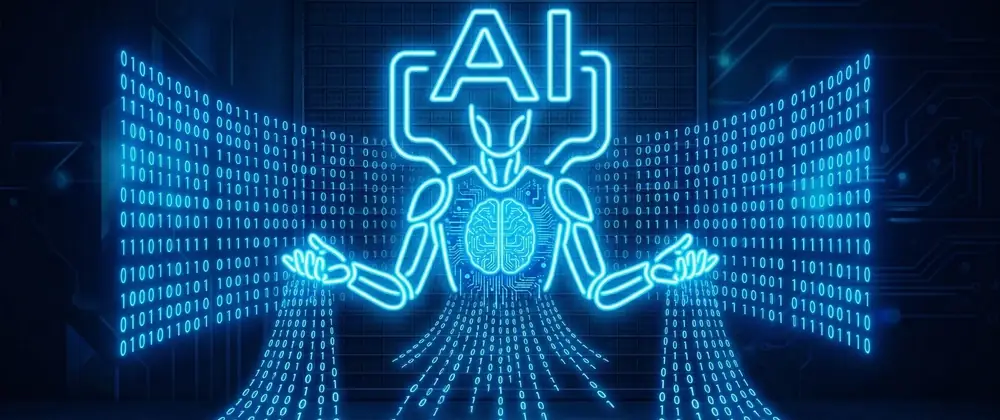
Message → AI → Binary
This approach eliminates many of the intermediate components that are normally involved in producing an executable:
No source code required
No compilation or interpretation needed.
No intermediate representation, like IL in C#
On paper, this sounds attractive: many steps are skipped, product creation could be faster and simplified, and AI could generate binaries directly without worrying about programming languages or their specifications.
Sounds like the next logical step, right?
Well... not entirely. This is far from the most practical approach, at least in the near or even distant future.
Let's discuss why this idea is problematic, but before we do, let's quickly address one of the most controversial questions.
Is it even feasible?
Many people are quick to dismiss this idea because they assume that AI simply can't generate binaries directly. That's understandable, AI can only learn from the data that exists and there is very little information on how to write software directly in binary. After all, humans don't and can't do it (well, unless your idea of fun is debugging a trillion bits at 2 a.m.).
However, that doesn't mean it's impossible (I'm talking about training AI models, not debugging binaries). Technically, it is feasible. You could take existing source code, there's no shortage of it, compile it to produce binary, and then create source code <-> binary code.
dataset to train AI models.
However, as you can imagine, this would require astronomical amounts of data and computational resources, making it extremely expensive. Which brings us to the next question.
It's worth it?
This question requires deeper analysis on multiple levels. Let's examine each point one by one.
What's the point of source code, anyway?
To explore this question, I will refer to my first article on this platform and link to an important section for this context.
Understanding your audience as a software engineer
Giorgi Kobaidze ・ March 25 25
If you don't feel like reading another article, here's a brief summary of the key points from that section:
Software code is not primarily for computers, it is for humans. Computers do not "understand" programming languages directly; they require translation to machine code through compilers, interpreters, or virtual machines. Programming languages are designed to be human-readable so that developers can write, read, and maintain code effectively. Clear, structured, and well-documented code avoids confusion, reduces errors, and avoids long-term technical debt. Writing with future maintainers in mind (including yourself) ensures smoother collaboration and easier maintenance as projects grow.
The main point is this: you don't write source code primarily for computers; otherwise you would be writing it in binary yourself. The source code exists for a very good